
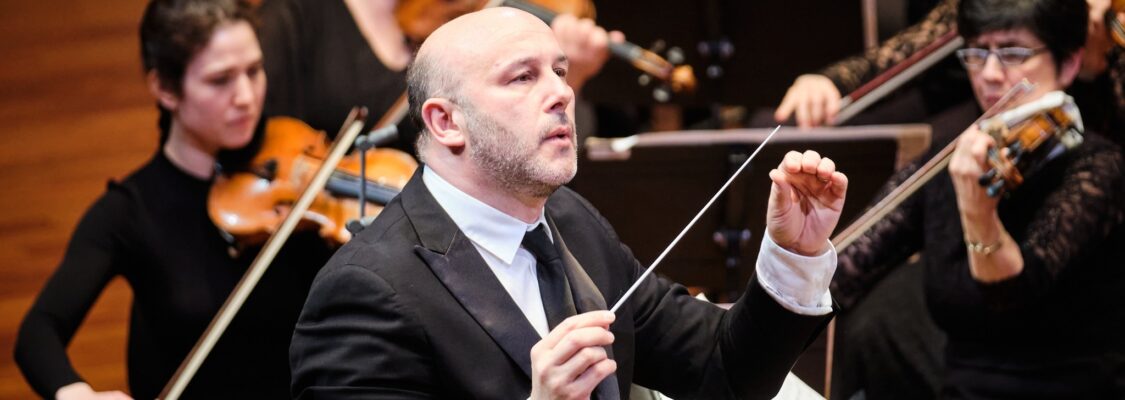
The programme I’m about to take on 10th May with the Hungarian Symphony Radio Orchestra at the Müpa, Budapest, is in a sense a paradigm of one of my current symphonic interests, since it will include Respighi’s Trilogia romana and the Concerto no. 1 in D minor by Martucci. The works have changed but not the composers, as this concert is the continuation of a project and of the true musical ardour that I poured into the cd “Italian perspectives” released by Pentatone a few months ago, with pieces by Respighi and Martucci. Moreover, looking back over my career, from the outset I’ve conducted Respighi in general, and especially the Trilogia: the music by this “scholarly poet” soon captivated me with its orchestration (of course), but also with that more subtle appeal that comes from its allusion to the conscious, sophisticated use of chromatic harmony that the great early twentieth century European composers were so fond of. Because Respighi is quite simply one of the greatest twentieth-century composers, and the Trilogia demonstrates this fully, even though for us, as Italians, it also bears witness to an ability to create true symphonic poems that recount, as Respighi did in this case, the sensations experienced in visiting a Rome that no longer exists, with “the cries of children like swallows in the evening”, the ditties and the pealing bells, or ancient Rome’s triumphal processions on the Appian Way heralded by buccina horns. Respighi was familiar with the evocative compositions of Smetana, Debussy and the more familiar Stravinskij, yet composed pieces that were strikingly and spontaneously personal. Completing the programme is Martucci’s first Concerto for piano and orchestra entrusted to the excellent Federico Colli who, like me, loves to engage with music that may be outmoded but is absolutely worthy of attention. The first piano Concerto, which Martucci composed in Paris, when he was just over twenty years old, shows his great mastery of piano composition and of structure, creating a work whose indisputable grandiloquence is never lacking in spirited poetry.
Photo: Vörös Attila